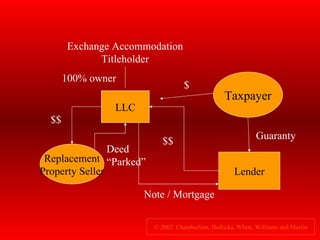
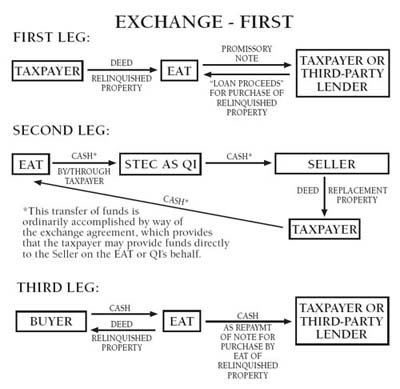
38 reverse 1031 exchange diagram
A reverse 1031 exchange is property exchange involves purchasing a replacement property before selling or trading the currently owned property. Reverse exchanges solely apply to Section 1031 property, which usually must be investment or business property. In a reverse 1031 exchange an investor acquires the replacement property first, before selling the relinquished property. Conducting a reverse exchange allows a real estate investor to quickly take advantage of an unexpected opportunity, such as a seller who needs to sell fast or property suddenly...
A 1031 exchange is a great tool for investors to defer taxes on rental properties. Be sure to follow all rules and talk to your accountant for the details. A 1031 exchange has many rules and regulations and you have to make sure you complete the exchange correctly to avoid a large tax bill from the IRS.

Reverse 1031 exchange diagram
The 1031 exchange has been considered as one of the most powerful wealth-building tool still available to taxpayers. It has been a major part of the success strategy of countless financial wizards and real estate A reverse 1031 tax-deferred exchange is essentially the same transaction described above. Learn more about reverse 1031 exchanges and other rules on like-kind exchanges. Dear Bill, If you follow all of the IRS rules for a "Reverse 1031 Exchange," then yes, it is possible to acquire property in a like-kind exchange before selling the property given up. Reverse Exchanges. Background. There are times when a taxpayer must take title to a desired replacement property before he can transfer the property to be relinquished. This is known as a reverse exchange and is not currently allowed under the IRC 1031 Like-Kind Exchange regulations.
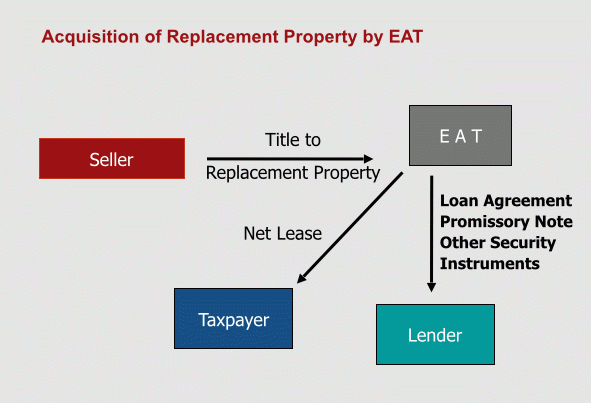
Reverse 1031 exchange diagram. Reverse Exchanges of either type are common and occur when a taxpayer arranges for an Exchange Accommodation Titleholder (EAT) (usually the Reverse Exchanges are also common where a taxpayer wants to acquire a property and construct improvements on it before taking title to the... In this video you'll learn when you might want to do a reverse 1031 exchange or construction exchange. The presenter, Wei Ming, will explain when to use... A reverse 1031 exchange is a way for real estate investors to trade investment properties without incurring capital gains taxes. A reverse 1031 exchange can allow an investor to move on an enticing property quickly, and puts the emphasis on selling a current investment property rather than finding a... A client recently came to us with the following 1031 exchange situation and question: We are currently in the middle of our 1031 identification period. If the timing works, you could split the replacement property into a part reverse exchange, and hold out a portion of the replacement property to...
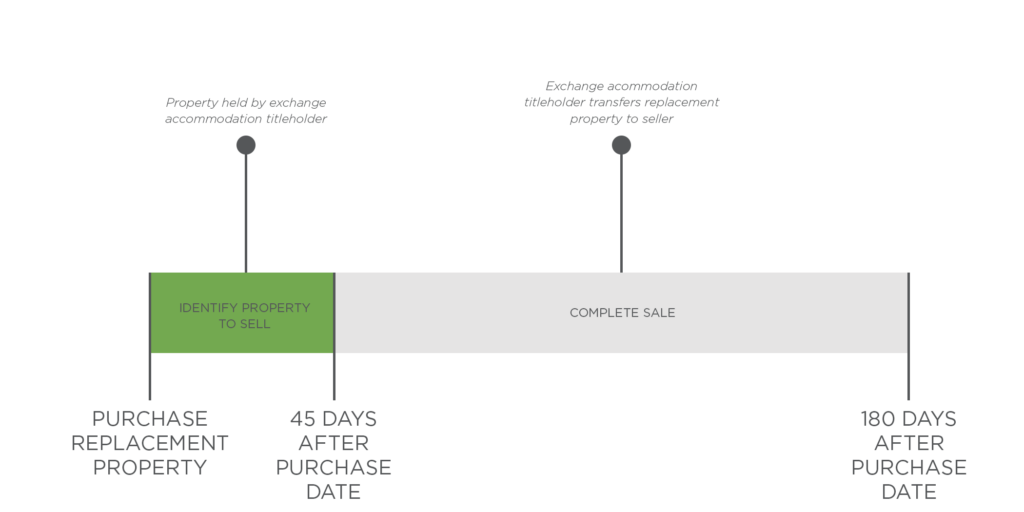
A 1031 exchange allows real estate investors to swap one investment property for another and defer capital gains taxes, but only if IRS rules are met. For example, if you designate a replacement property exactly 45 days later, you'll have just 135 days left to close on it. Reverse Exchange. A 1031 Exchange is a real estate transaction that allows investors to defer capital gains taxes on the profitable sale of an investment property as long as they use the sale As the name suggests, the steps are opposite in a reverse exchange. The exchanger purchases the replacement property first. 1031 Exchange is a swap of one investment property for another which allows capital gains tax to be deferred. A reverse exchange can be described as buy first, exchange later. In this case, you're buying the "replacement" or upgraded property first. What is a Reverse 1031 Exchange? The 1031 Exchanges are complex transactions that allow the counterparties to defer taxes. Deferred taxes include capital gains and depreciation recapture when exchanging like-kind properties. These are properties that are exchangeable with one another...
A reverse 1031 exchange represents a tax deferment strategy when, for a variety of reasons, the replacement property must be The cost of a reverse 1031 exchange is generally much higher than a forward exchange because of the complexity and standard state fees associated with such exchanges. A reverse 1031 exchange can save you a lot of money in taxes, but they have a lot of rules. This method makes 1031 exchanges far easier. You can sell your property to someone unrelated to the person whose property you want to buy and still get favorable tax treatment. The Traditional 1031 Reverse Exchange - This is a reverse 1031 exchange that in most cases looks identical in structure to the "Safe harbor" reverse 1031. Yet it will fall outside of the "safe harbor" due to the fact the exchange can't be completed within the time frames provided. Reverse 1031 Exchange - Know the Reverse 1031 Exchange Rules to defer capital gain taxes. Call us today to get connected with our experts. The opposite of a reverse 1031 Exchange is the standard 1031 delayed or deferred exchange, in which the exchanger needs to relinquish owned...
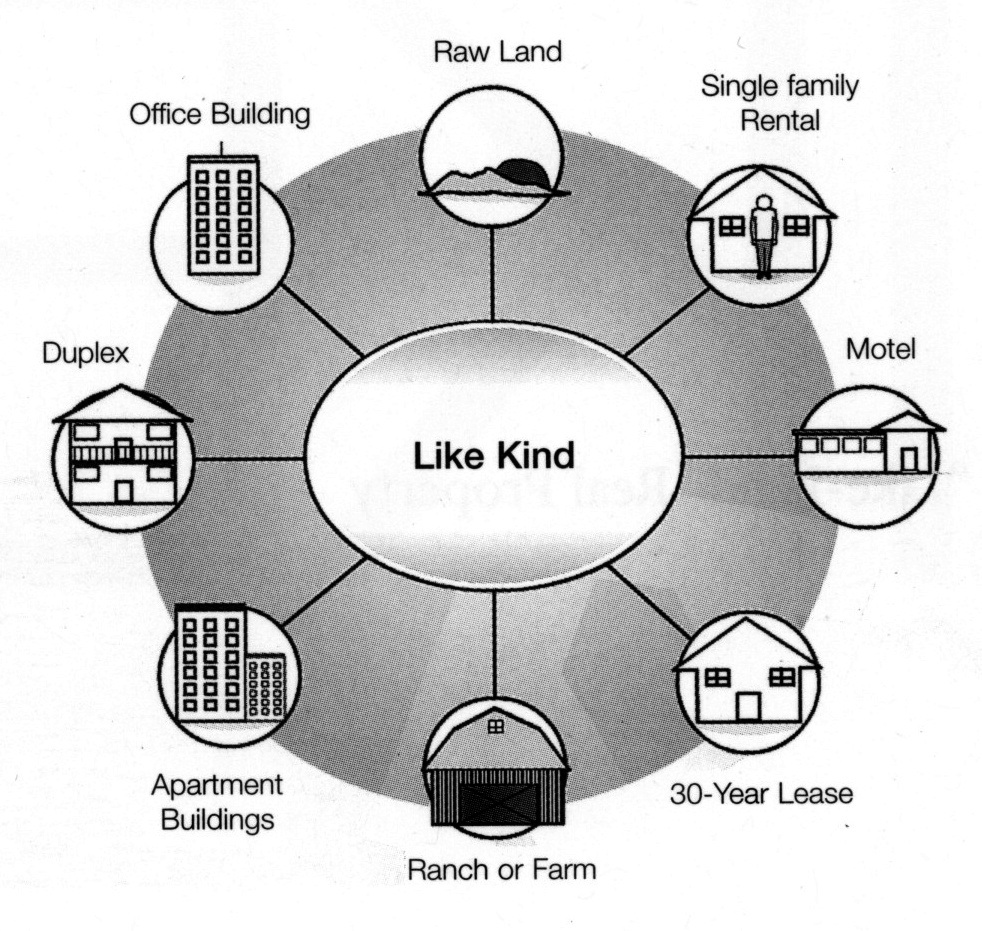
Like-Kind Property - 1031 Exchange Experts Equity Advantage ...
A 1031 exchange allows you to defer capital gains tax, thus freeing more capital for investment in the replacement property. It's important to keep in mind ●If you acquire the replacement property before selling the property to be exchanged, it is called a reverse exchange. In this case, the property must...

1031 Exchange - Agent Plus Realty
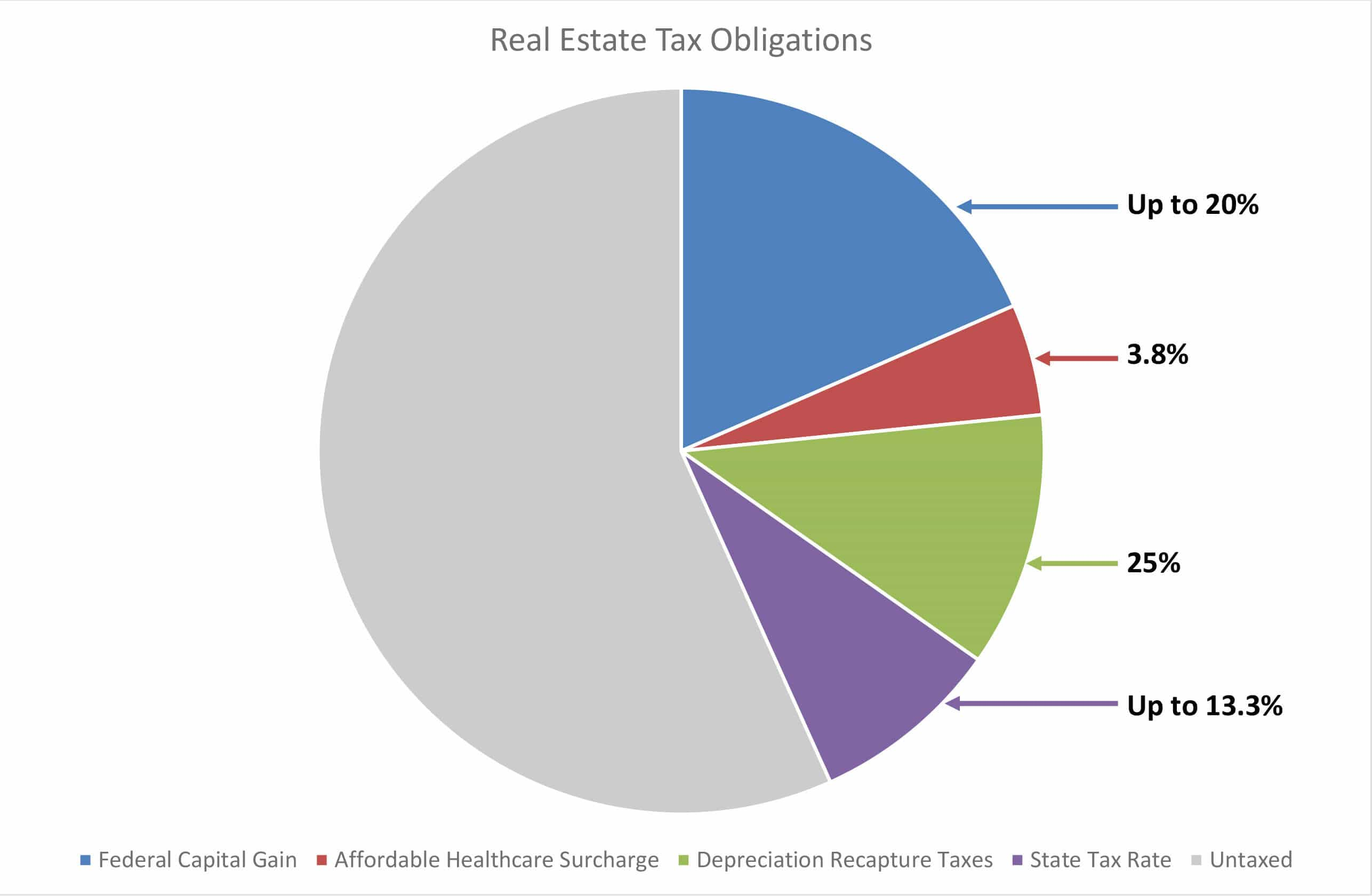
A 1031 exchange is a transaction in which you can sell your rental or investment property and defer all of the tax that would otherwise be due on the sale, including both the capital gains tax, depreciation recapture tax, and state income tax. Most people underestimate just how much they will pay in taxes...

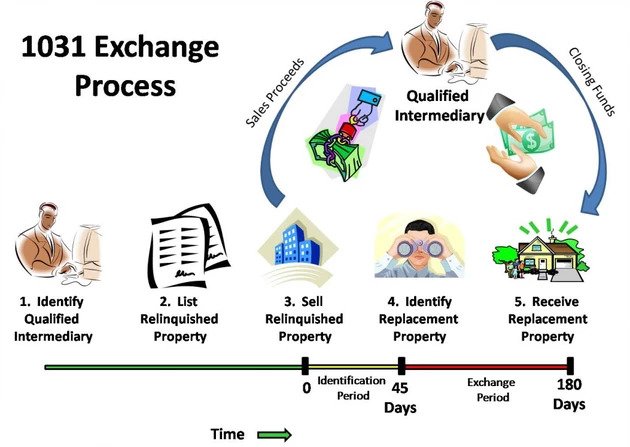
Delayed 1031 Exchange - Exchange Timelines & Deadlines - IPX1031
1031 exchanges also allow investors to move their investments around easily and diversify their portfolios to minimize risk. They can also be used to move from investment properties that A reverse exchange or forward exchange happens in the exact opposite order from a delayed exchange.

Reverse Exchange - Reverse 1031 Exchange Rules
While delayed 1031 exchanges are the most common, real estate investors use a reverse 1031 exchange when they must close on the replacement property before the relinquished property is sold.

Deferred Like-Kind Exchanges What is a 1031 Exchange? “No ...
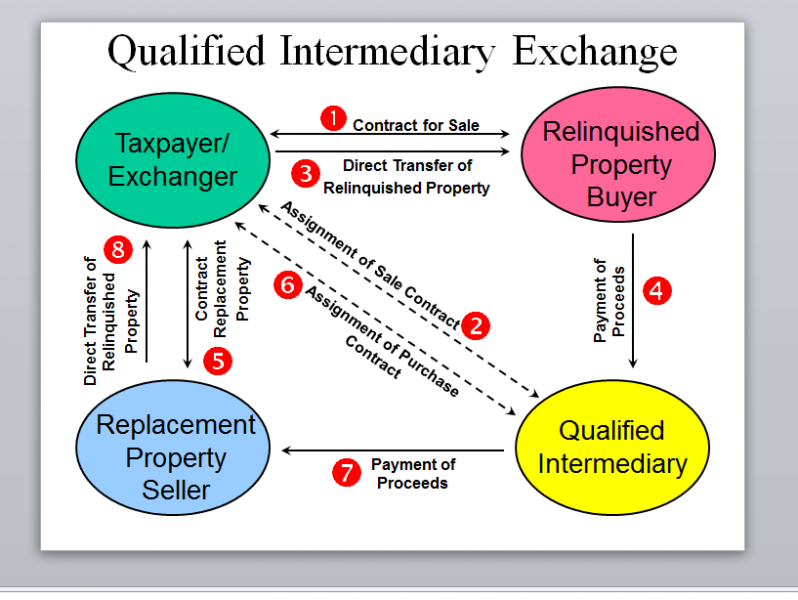
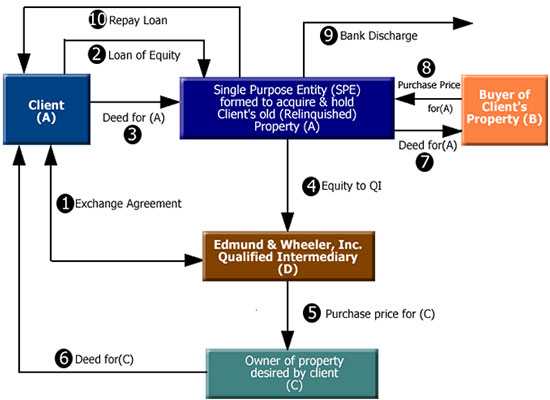
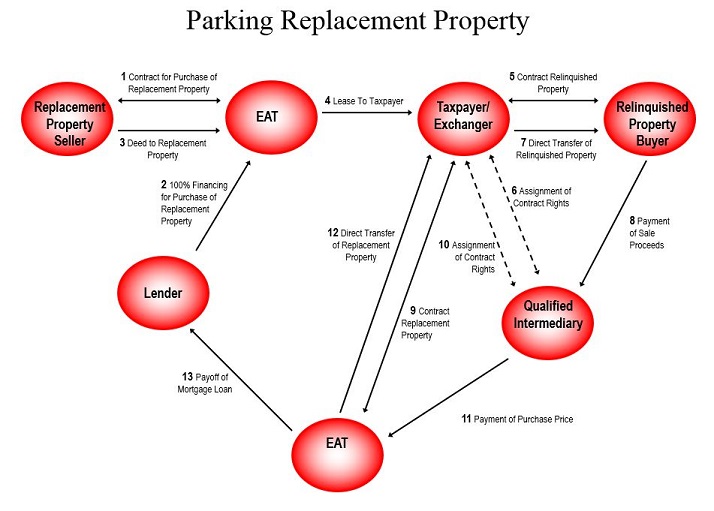
This reverse 1031 exchange diagram illustrates how a reverse 1031 exchange unfolds, including what happens at each step In a blended reverse 1031 exchange, some replacement closings occur first, but some also take after the sale. Again, these exchanges can be confusing, even for those with...
1031 Exchanges In Georgia
A reverse 1031 exchange can be a very useful strategy for real estate investors who want to defer taxes. Read on to learn more about it. A reverse 1031 exchange is a strategy that property investors use to defer taxes when they want to acquire a replacement property before selling their relinquished...
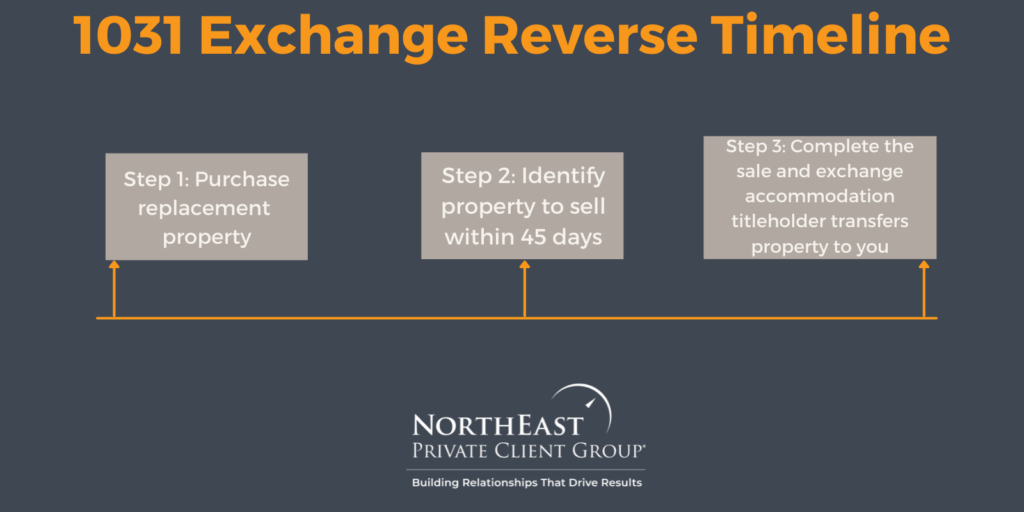
How to do a 1031 Exchange: Guidelines & Opportunity for Investors
1031 Exchange transactions, especially those structured as Reverse 1031 Exchanges, are exceptionally complicated income tax deferral strategies. The sophisticated Investor will always have a good team of experienced professional advisors, including legal, tax, and financial advisors, along...
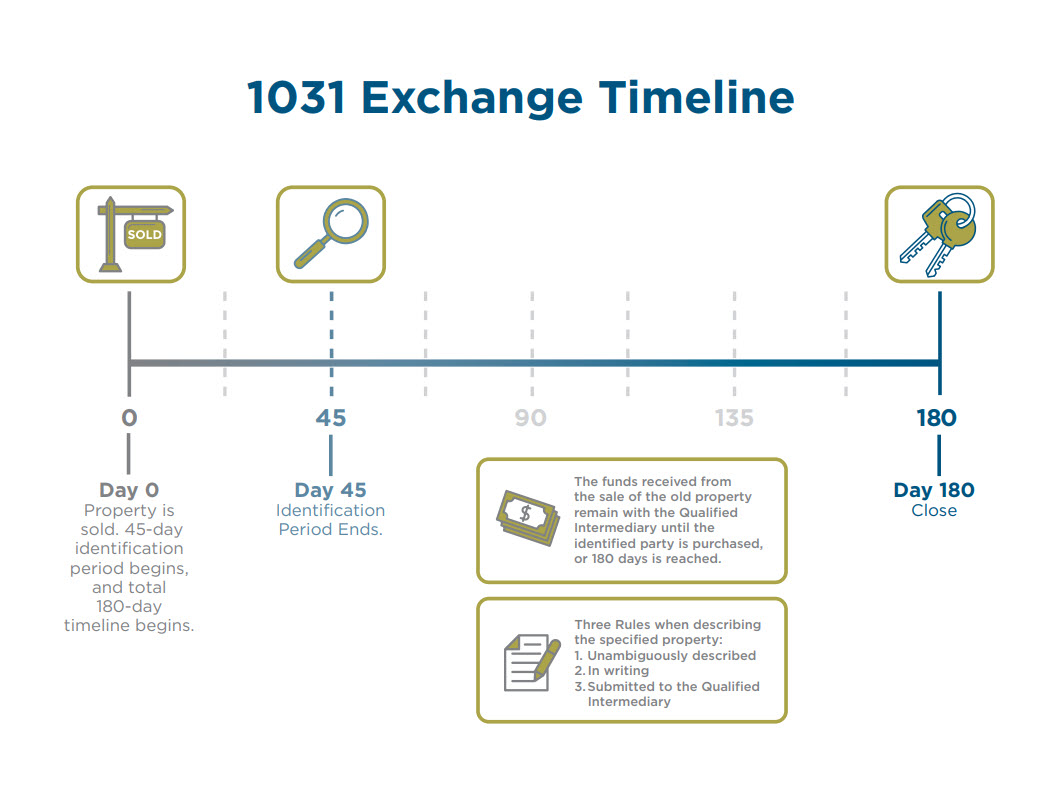
1031 Exchange Timeline Overview and Considerations | Accruit
Rules governing reverse 1031 exchanges are complex. The Reverse Exchange is structured primarily with Revenue Procedure 2000-37 in mind. Although Reverse Exchanges have been structured for decades prior to the Revenue Procedure, many investors now follow the Revenue...
Ask our 1031 Exchange Accommodators Questions | FGG 1031
Internal Revenue Code section 1031. Article Talk. Language. Watch. Edit. Under Section 1031 of the United States Internal Revenue Code (26 U.S.C. § 1031), a taxpayer may defer recognition of capital gains and related federal income tax liability on the exchange of certain types of property...

Reverse 1031 Exchange Process & Timeline Explained [Investor ...
Learn more about 1031 Reverse Exchanges today. The need for a reverse 1031 exchange arises when circumstances require that the replacement property be acquired before closing on the relinquished property.

Reverse 1031 Exchanges: The Ultimate Guide (2020 ...
The below diagram illustrates the benefits of exchanging versus selling Property that qualifies for exchange under Section 1031 must be "like-kind", which is defined in the Regulations as follows We have a reverse exchange specialist on our team who can help plan and facilitate even the most...

SCES 1031 - Posts | Facebook
What is a 1031 Reverse Exchange? A reverse exchange refers to the sequence of a taxpayer's sale of relinquished property and the purchase of Do the Internal Revenue Service Regulations: IRC§1031 Allow for Reverse Exchanges? Not specifically. After the landmark legal decision in the Starker case...

How to Do a 1031 Exchange — The Cauble Group
Reverse Exchanges. Background. There are times when a taxpayer must take title to a desired replacement property before he can transfer the property to be relinquished. This is known as a reverse exchange and is not currently allowed under the IRC 1031 Like-Kind Exchange regulations.

RLPP phase 2 - IPX1031
Learn more about reverse 1031 exchanges and other rules on like-kind exchanges. Dear Bill, If you follow all of the IRS rules for a "Reverse 1031 Exchange," then yes, it is possible to acquire property in a like-kind exchange before selling the property given up.

Download ãƒã‚¹ã‚¿ãƒ¼é¡ã€729×1031 images for free
The 1031 exchange has been considered as one of the most powerful wealth-building tool still available to taxpayers. It has been a major part of the success strategy of countless financial wizards and real estate A reverse 1031 tax-deferred exchange is essentially the same transaction described above.
Everything you Need to Know About a Reverse 1031 Exchange

1031 Exchange Timeline: How the IRS 1031 Exchange Process Works

1031 Exchange Timeline | CPEC - 1031 Exchanges in Minneapolis, MN

Reverse 1031 Exchange – Everything You Need to Know

What is a 1031 Exchange? | TOM PRESLER, Realtor in Hawaii
Chicago Deferred Exchange Company | Reverse Exchange ...

IRC § 1031 EXCHANGES | DJF Exchange

1031 Reverse Exchange — Meridian Title
What is a 1031 Exchange? - Linville | Team Partners

1031 Exchange Archives - Norada Real Estate Investments
Are Tax Deferred Exchanges of Real Estate Approved by the IRS ...
jamesnelsonmkrs | New York City Commercial Real Estate

1031 Exchange | Realty Yield | Real Estate Investment Consulting
Exchange Case Study 5 - Edmund & Wheeler
)
1031 Like-Kind Exchange of Real Estate Structure Charts ...

1031 Exchanges | Bradshaw & Company, LLC

How Does a Reverse 1031 Exchange in Real Estate Work? - 2022 ...
1031 Exchange in NYC - investment strategies - NesyApple
How Does a Reverse 1031 Exchange in Real Estate Work? - 2022 ...

1031 Exchanges | Bradshaw & Company, LLC
1031 Reverse Tax Deferred Exchanges
6/1/2005 Newsletter and Legal Memorandum Article
1031 Update – Advanced Exchange Strategies for Attorneys


Comments
Post a Comment