39 hubble tuning fork diagram
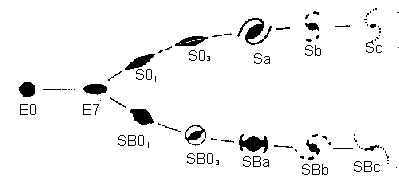
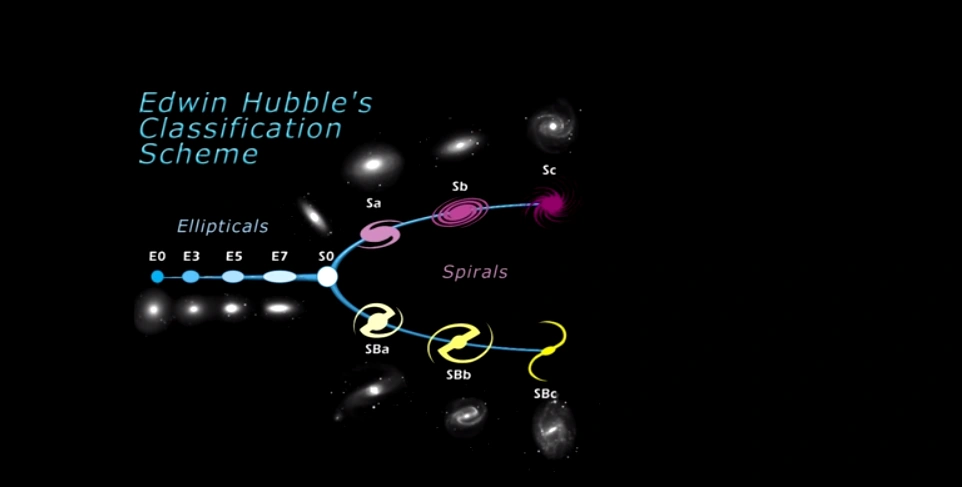
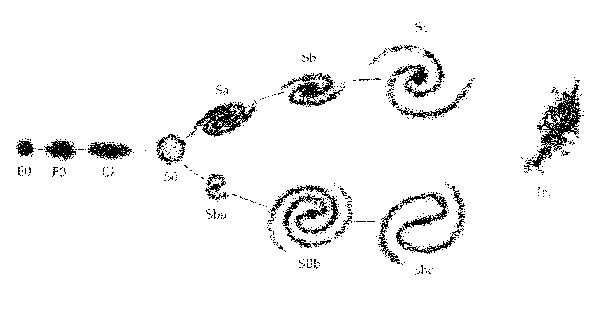
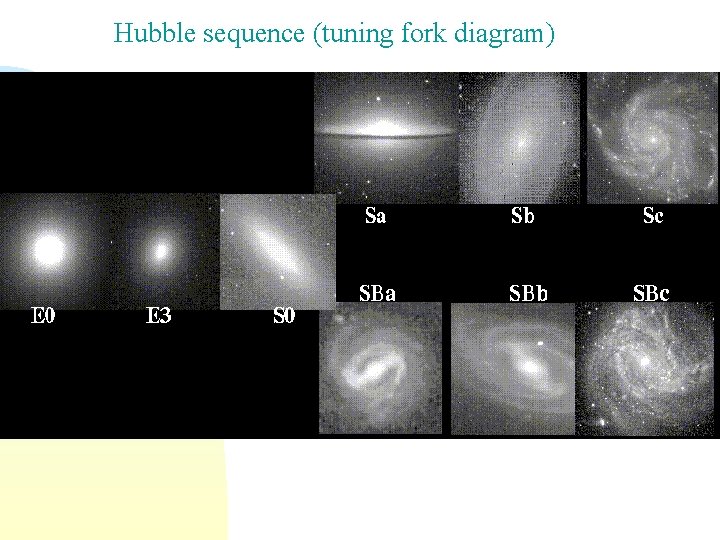
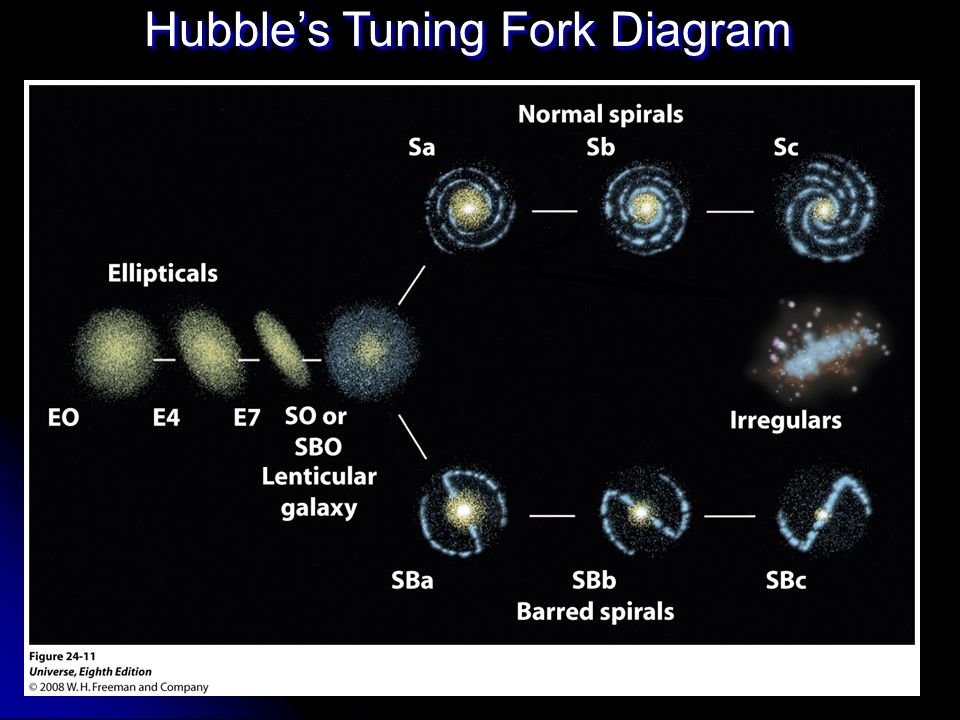
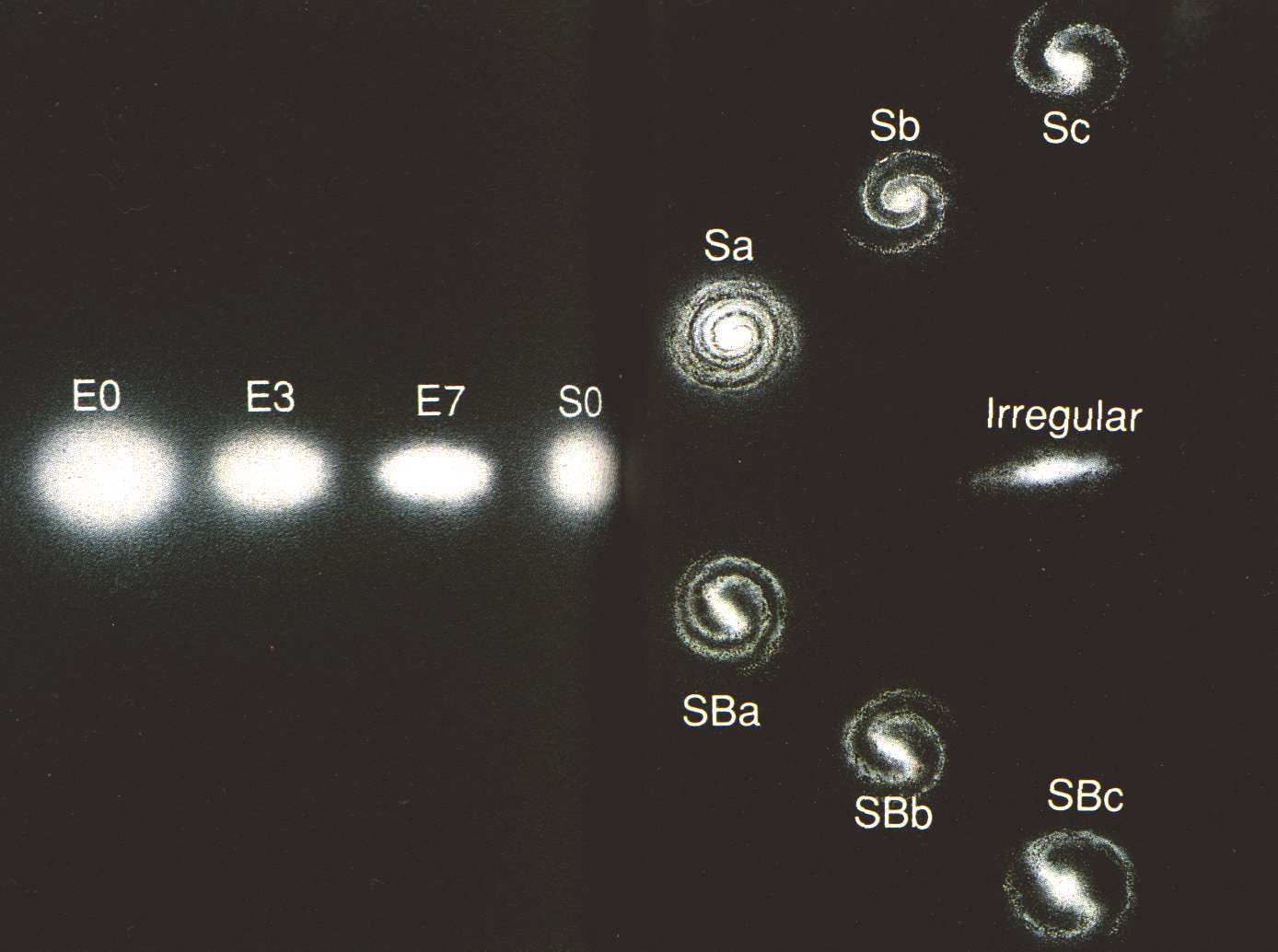
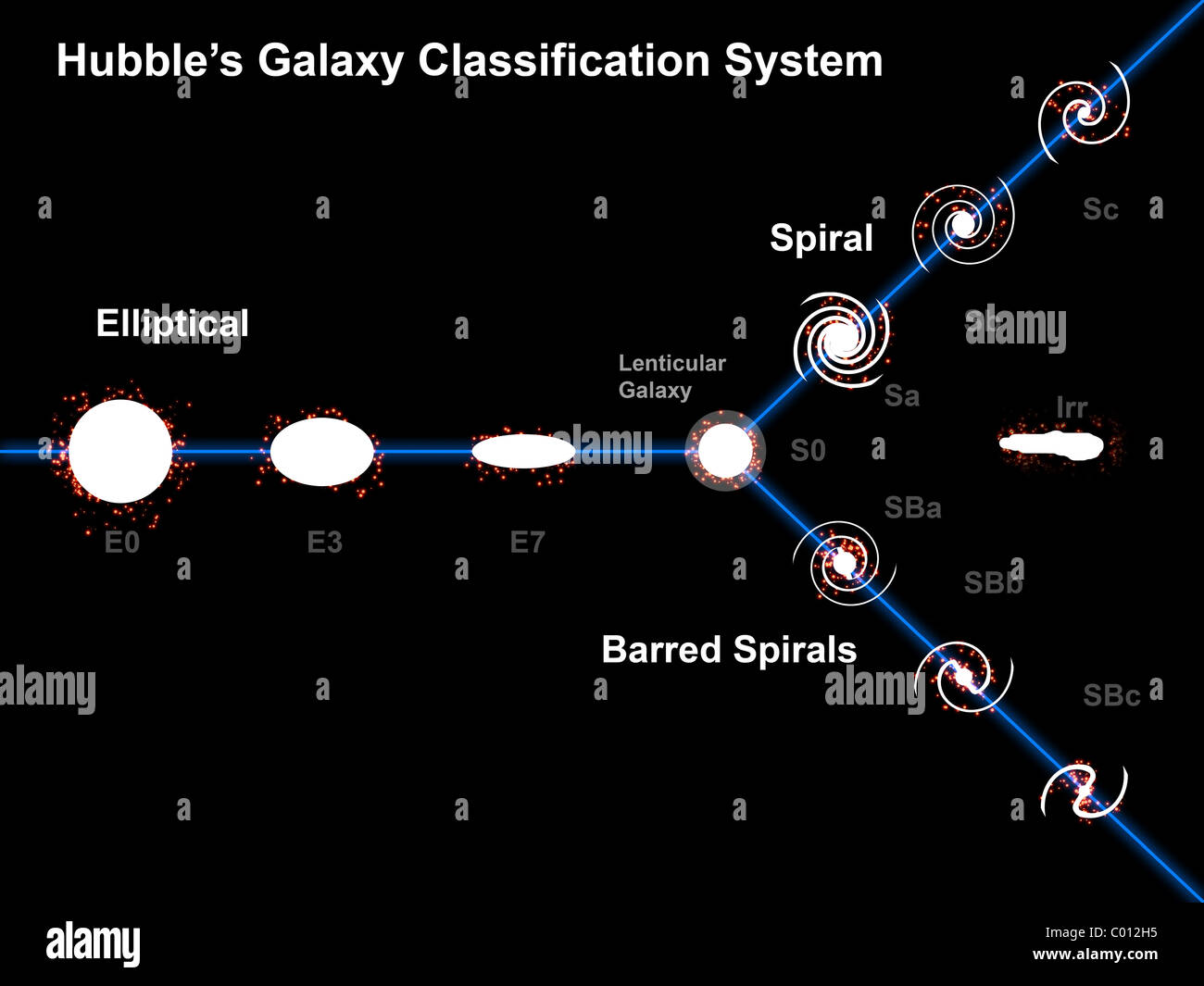
Hubble Tuning Fork Diagram. This chart shows all of the classifications of different shapes of galaxies. S0 is an extra category that Hubble used to describe the shape of galaxies that were about halfway between elliptical galaxies and spiral galaxies. E = Elliptical, S = Spiral, SB = Barred Spiral. BACK The Hubble Tuning-fork. In 1926, the American Astronomer Edwin Hubble developed a classification scheme of galaxies based on their shapes and structure, or in other words, on their morphology. This scheme is called the Hubble Sequence or Hubble tuning-fork diagram because the shape in which it is usually shows resembles a tuning-fork, like the ...
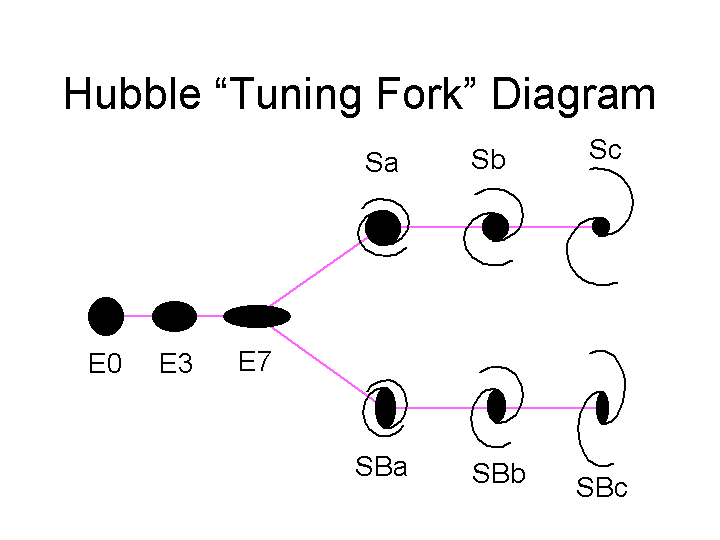
The astronomical diagram example "Tuning-fork style diagram of the Hubble sequence" was created using the ConceptDraw PRO diagramming and vector drawing software extended with the Astronomy solution from the Science and Education area of ConceptDraw Solution Park.
Hubble tuning fork diagram
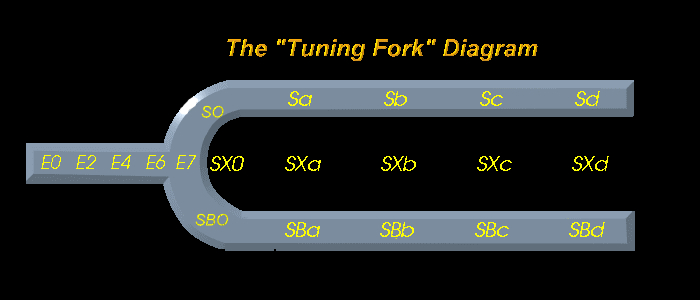
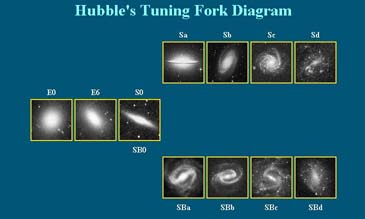
You can see why this diagram is called the Hubble tuning fork. Hubble believed that galaxies started at the left end of the diagram and evolved to the right. He called the elliptical galaxies "early galaxies" and the spirals "late galaxies." We now know that he was wrong: galaxies do not move down the forks of the diagram as they evolve. You can see why this diagram is called the Hubble tuning fork. Hubble believed that galaxies started at the left end of the diagram and evolved to the right. He called the elliptical galaxies "early galaxies" and the spirals "late galaxies." We now know that he was wrong: galaxies do not move down the forks of the diagram as they evolve. Hubble's Tuning Fork Diagram. Sa Sb Sc Sd ; E0 E6 S0 ; SB0 ; SBa SBb SBc SBd ; Irr dE; updated 8 Apr 1996 - Ray White ...
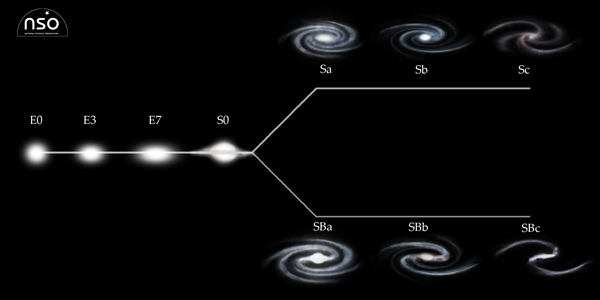
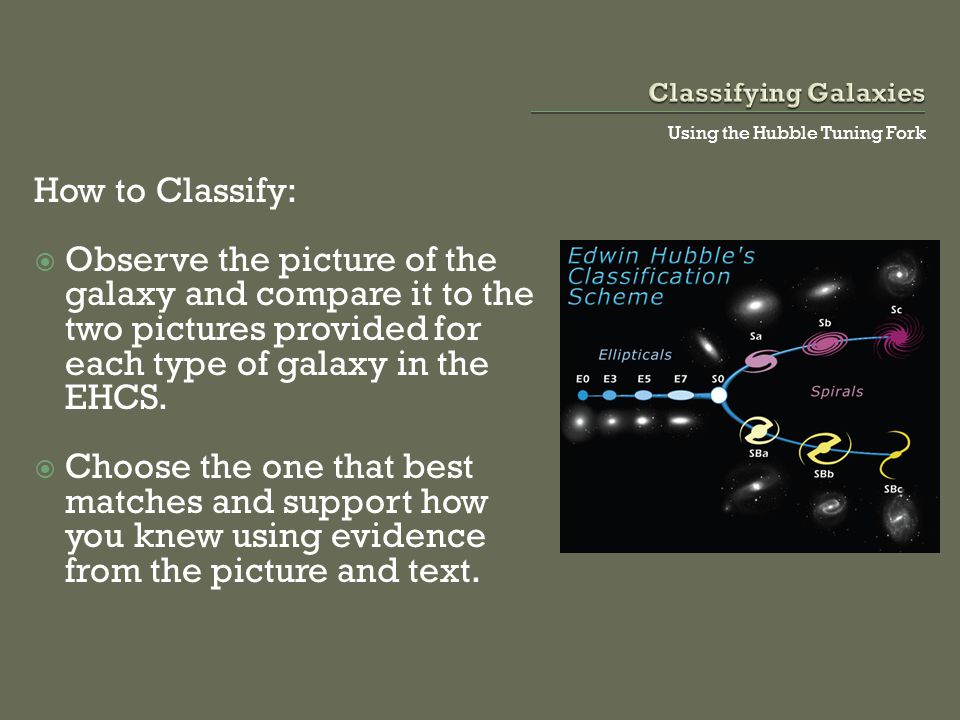
Hubble tuning fork diagram. The Hubble Tuning Fork diagram proves that galaxies gradually move from being elliptical galaxies to spiral galaxies over time. False A galaxy that looks like a smooth squashed sphere would like be classified as a(n) __________ galaxy. As one of the first steps towards a coherent theory of galaxy evolution, the American astronomer Edwin Hubble, developed a classification scheme of galaxies in 1926. Although this scheme, also known as the Hubble tuning fork diagram, is now considered somewhat too simple, the basic ideas still hold. The diagram is roughly divided into two parts ... Hubble Tuning Fork Diagram. The tuning fork diagram was first drawn by Edwin Hubble as a way of describing galaxies by how they look. Elliptical galaxies make up the branch on the left while the spirals and the barred spirals make up the "prongs" of the fork. The most round ellipticals are on the left and they get flatter towards the right. The Hubble tuning fork diagram for galaxies is useful because it: A) shows how galaxies change over time. B) organizes galaxies according to their age and size. C) provides an objective way to classify galaxies that does not vary between observers. D) categorizes galaxies by shape and appearance. Question: The Hubble tuning fork diagram for ...
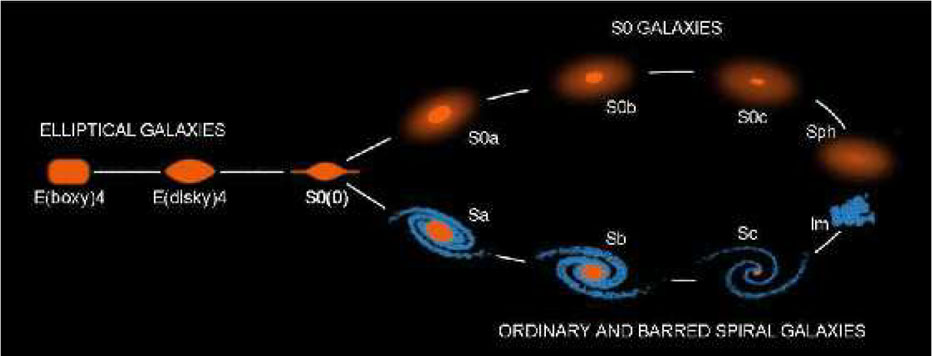
The Hubble sequence is a morphological classification scheme for galaxies invented by Edwin Hubble in 1926. It is often colloquially known as the Hubble tuning fork diagram because the shape in which it is traditionally represented resembles a tuning fork . Tuning-fork style diagram of the Hubble sequence. In 1926, astronomer Edwin Hubble realised that there are several types of galaxy and developed a classification scheme, known as the Hubble tuning fork diagram. The diagram is roughly divided into two parts: elliptical galaxies (ellipticals) and spiral galaxies (spirals). [Hubble sequence. Wikipedia] The astronomical diagram example "Tuning-fork style diagram of the Hubble sequence" was created using the ConceptDraw PRO diagramming and vector drawing software extended with the Astronomy solution from the Science and Education area of ConceptDraw Solution Park. Galaxy Diagram Tuning Fork diagram 15.7 - Know how the different types of galaxies were placed by Hubble on his 'Tuning Fork' diagram. Edwin Hubble classified galaxies according to their shape. Ge produced a tuning fork diagram as he thought this demonstrated the evolution of elliptical galaxies into spirals.
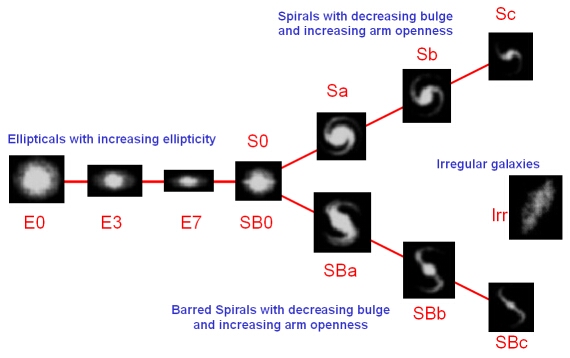
Hubble Tuning Fork Diagram. The tuning fork diagram was devised by Hubble as a means of classifying galaxies by their appearance. The ellipticals are arranged in one branch while the spirals and the barred spirals form two parallel branches. The ellipticals are arranged in order of increasing ellipticity from left to right while the spirals and ... The Hubble Tuning Fork. After he discovered what galaxies really were, Edwin Hubble became the first person to classify galaxies. Astronomers use his system, called the "Hubble Tuning Fork," even today. First, Hubble divided the galaxies into two general categories: elliptical and spiral galaxies. The Hubble tuning fork - Classification of galaxies.The diagram is roughly divided into two parts: elliptical galaxies (ellipticals) and spiral galaxies (spirals).Hubble gave the ellipticals numbers from zero to seven, which characterize the ellipticity of the galaxy - "E0" is almost round, "E7" is very elliptical. [Hubble sequence. Wikipedia] The astronomical diagram example "Tuning-fork style diagram of the Hubble sequence" was created using the ConceptDraw PRO diagramming and vector drawing software extended with the Astronomy solution from the Science and Education area of ConceptDraw Solution Park. Astronomical Diagram
Galaxies Astronomy 154 Lab 6 Galaxies, like the ones pictured ...
As one of the first steps towards a coherent theory of galaxy evolution, the American astronomer Edwin Hubble, developed a classification scheme of galaxies in 1926. Although this scheme, also known as the Hubble tuning fork diagram, is now considered somewhat too simple, the basic ideas still hold. The diagram is roughly divided into two parts ...
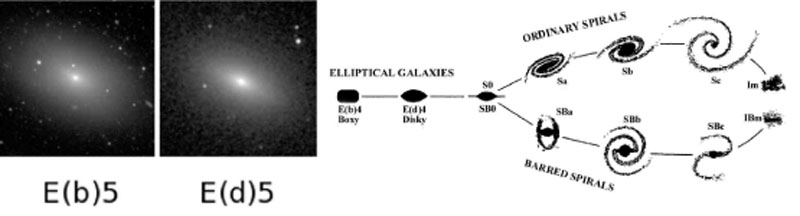
Galaxy Morphology - Ronald J. Buta
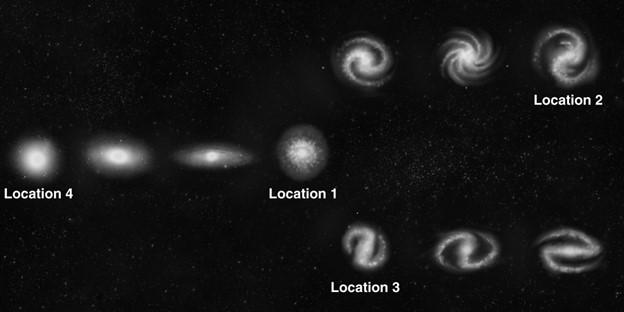
Figure 9.2: Diagram of Hubble's Tuning Fork classification scheme from Hubblesite. This is a classical type of image still used by astronomers today to show how galaxies are classified. On the left are four images of elliptical galaxies proceeding from nearly circular / spheroidal (E0 type) to very elongated elliptical / ellipsoidal (E7).

File:Hubblescheme.png - Wikibooks, open books for an open world
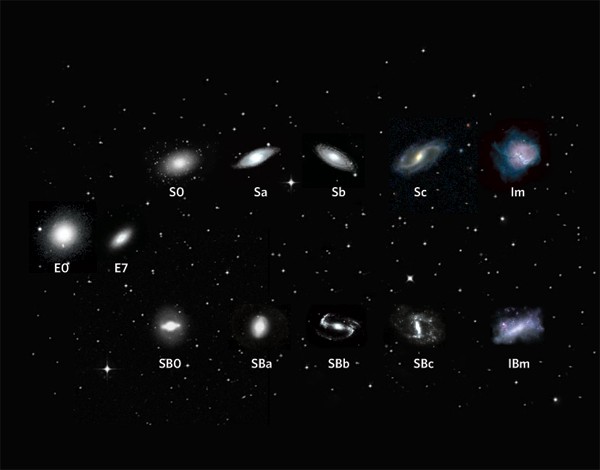
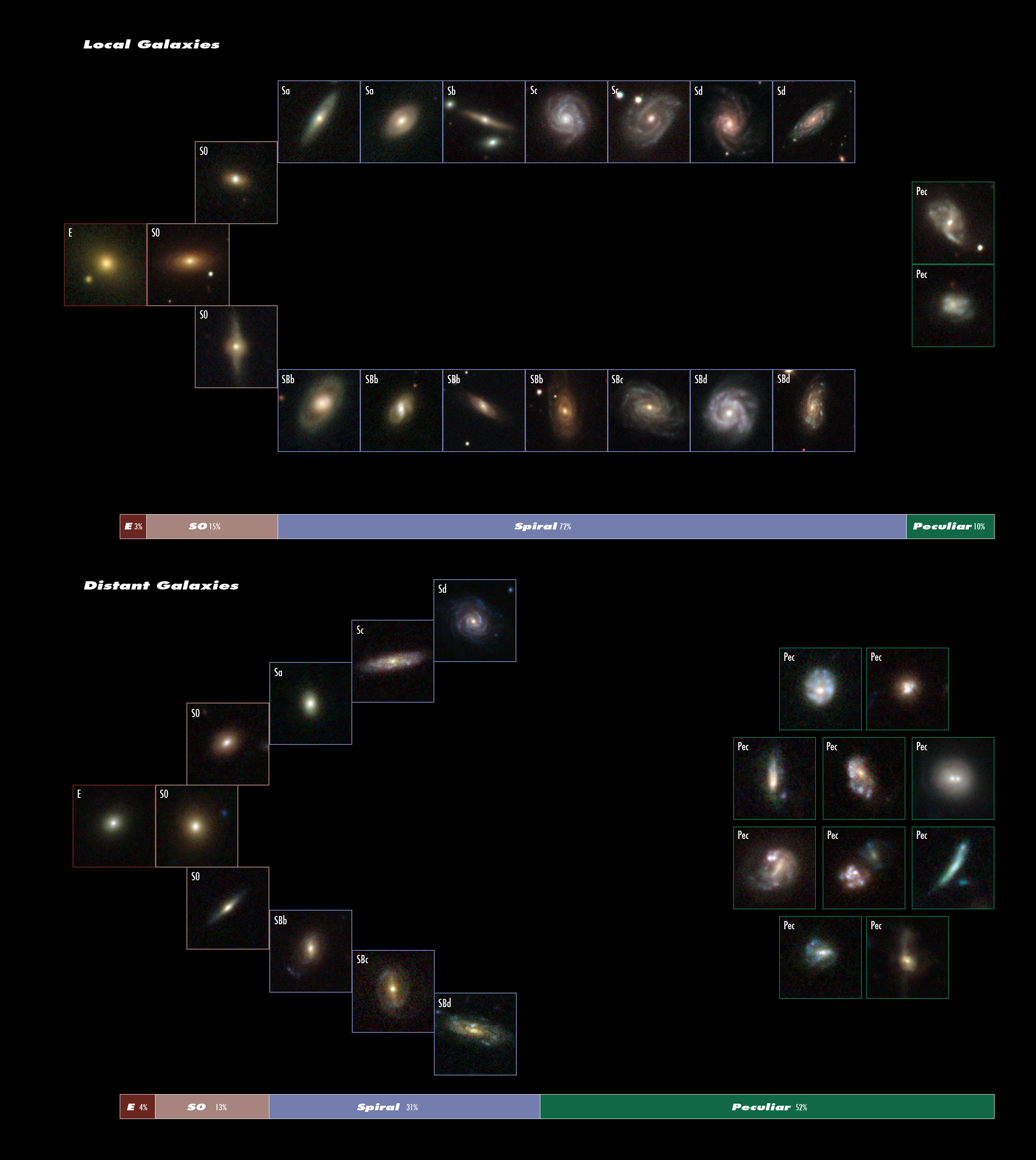
Tuning-fork style diagram of the Hubble sequence. Hubble's scheme divided regular galaxies into three broad classes - ellipticals, lenticulars and spirals - based on their visual appearance (originally on photographic plates). A fourth class contains galaxies with an irregular appearance. The Hubble sequence is the most commonly used system ...
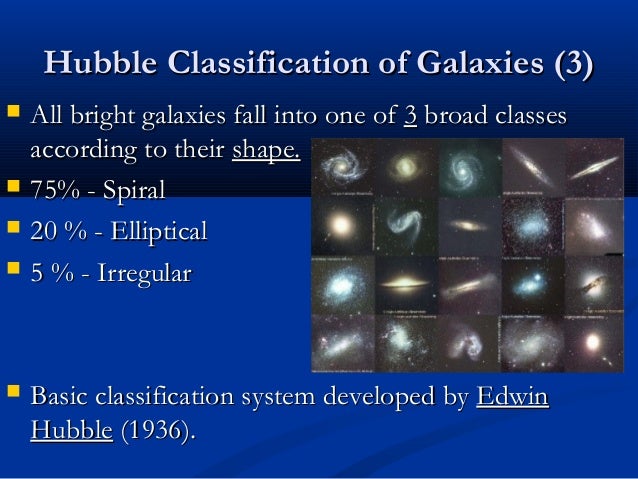
Galaxies
As one of the first steps towards a coherent theory of galaxy evolution, the American astronomer Edwin Hubble, developed a classification scheme of galaxies in 1926. Although this scheme, also known as the Hubble tuning fork diagram, is now considered somewhat too simple, the basic ideas still hold. The diagram is roughly divided into two parts ...

Galaxy Morphology - Ronald J. Buta
Hubble's Tuning Fork Diagram. Sa Sb Sc Sd ; E0 E6 S0 ; SB0 ; SBa SBb SBc SBd ; Irr dE; updated 8 Apr 1996 - Ray White ...

Faulkes Telescope Educational Guide - Galaxies - Tuning Fork ...
You can see why this diagram is called the Hubble tuning fork. Hubble believed that galaxies started at the left end of the diagram and evolved to the right. He called the elliptical galaxies "early galaxies" and the spirals "late galaxies." We now know that he was wrong: galaxies do not move down the forks of the diagram as they evolve.
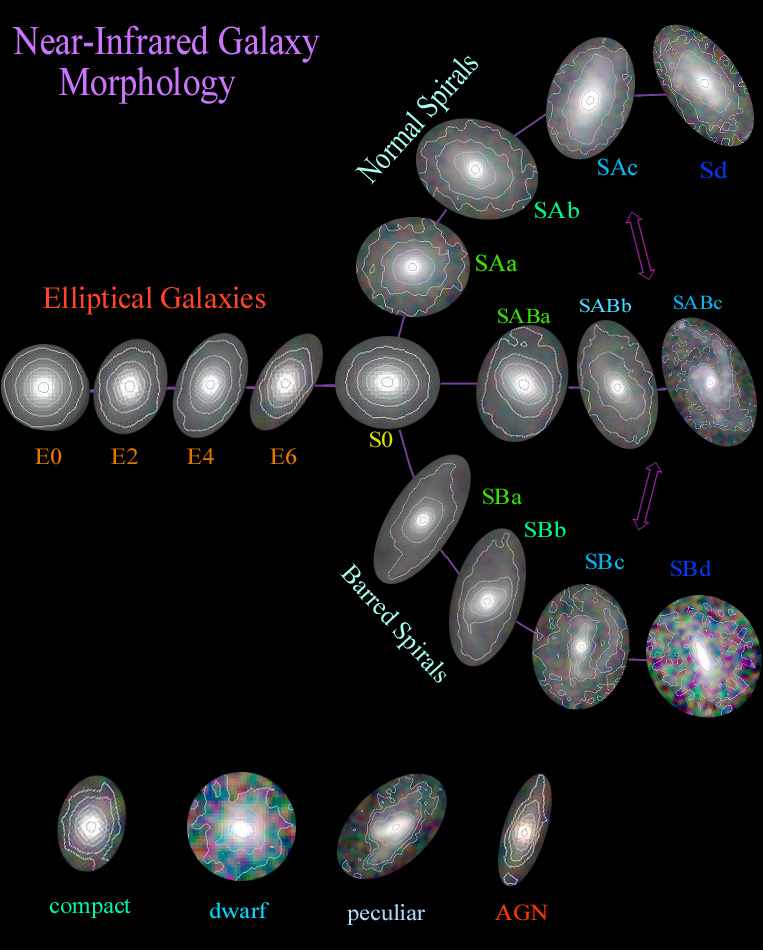
Astronomy 505
You can see why this diagram is called the Hubble tuning fork. Hubble believed that galaxies started at the left end of the diagram and evolved to the right. He called the elliptical galaxies "early galaxies" and the spirals "late galaxies." We now know that he was wrong: galaxies do not move down the forks of the diagram as they evolve.
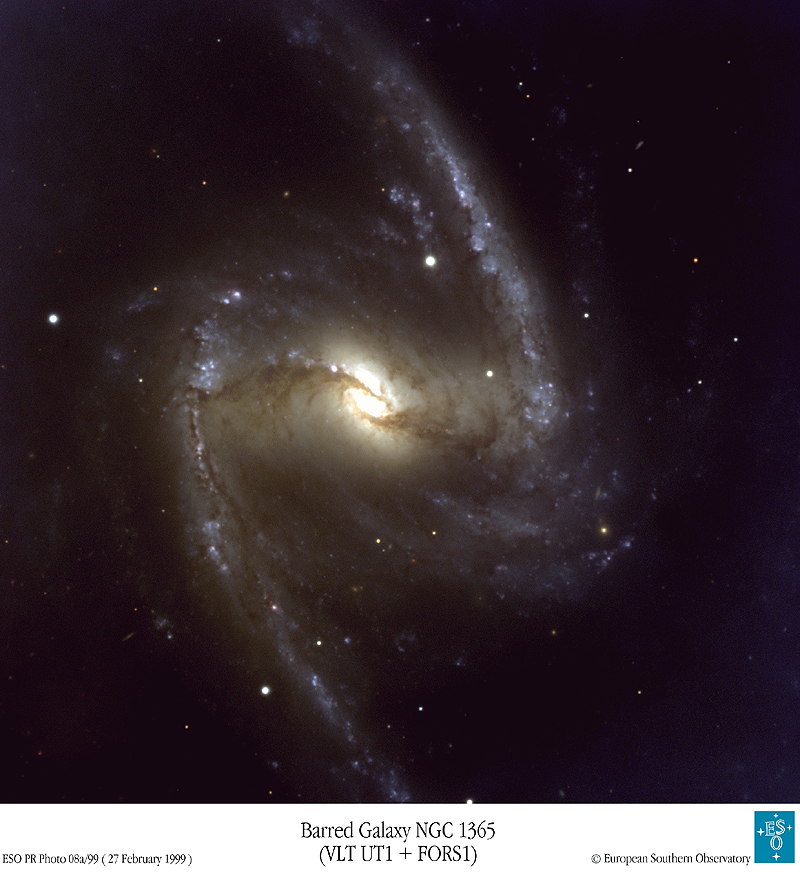
Hubble's Tuning Fork and Galaxy Classification | Astronomy ...

TAMWEB - Exhibit Info

Figure 1 | Automated morphological classification of galaxies ...
Theoretical Astrophysics — Guides — Galaxy classification
Galaxy Classification | How Far Away Is It Wiki | Fandom
Music Tuning Mystory Materials
Galaxies along the Hubble Sequence: a CCD Galaxy Gallery
A galaxy at the centre of the Hubble Tuning Fork – Astronomy Now

Solved See Hint Galaxies are typically classified based on ...

galaxies, Hubble sequence

Hubble Tuning Fork Diagram

The Hubble tuning fork diagram. | Download Scientific Diagram
Lecture 2 Stars Hubble sequence Galaxy classification Photometry

Galaxies. - ppt download
Hubble Classification | COSMOS

The Hubble Tuning Fork Scheme. | Download Scientific Diagram
Out of order | Nature
GalaxiesGalaxies Learning Outcome (Student will…): compare ...

PHYS, Stars & Galaxies, Chap. 24, Homework & Test Review ...
Lecture 27: Types of Galaxies

Create a Hubble Tuning Fork Diagram Activities & Project for ...
Galaxy Classification | National Schools' Observatory
GALAXIES
Hubble's Tuning Fork | by Brian Koberlein
SWBAT: 1. Use the hubble tuning fork to classify galaxies ...
ESA Science & Technology - The evolution of the Hubble sequence

The Hubble tuning fork - classification of galaxies | ESA/Hubble

Hubble sequence
The Evolution of Galaxy Structure over Cosmic Time ...
Hubble Tuning Fork High Resolution Stock Photography and ...

Different Types of Galaxies In The Universe - RankRed
Solved The figure below shows a schematic of the Hubble ...


Comments
Post a Comment